
Gazebo Stain Rescue: Sanding Down an Over-Applied Coat and Restoring with Cabot® Semi-Transparent
Most stain failures in the Tri-Cities don't come from bad product — they come from bad application. We get a steady stream of "rescue" calls every spring from homeowners whose previous stain job didn't hold up the way they expected. The gazebo project we're sharing here is one of the most dramatic before-and-after transformations we've done this year, and it's a textbook example of what goes wrong when a penetrating oil stain is applied too heavy.
Before: What Happens When Semi-Transparent Stain Is Over-Applied
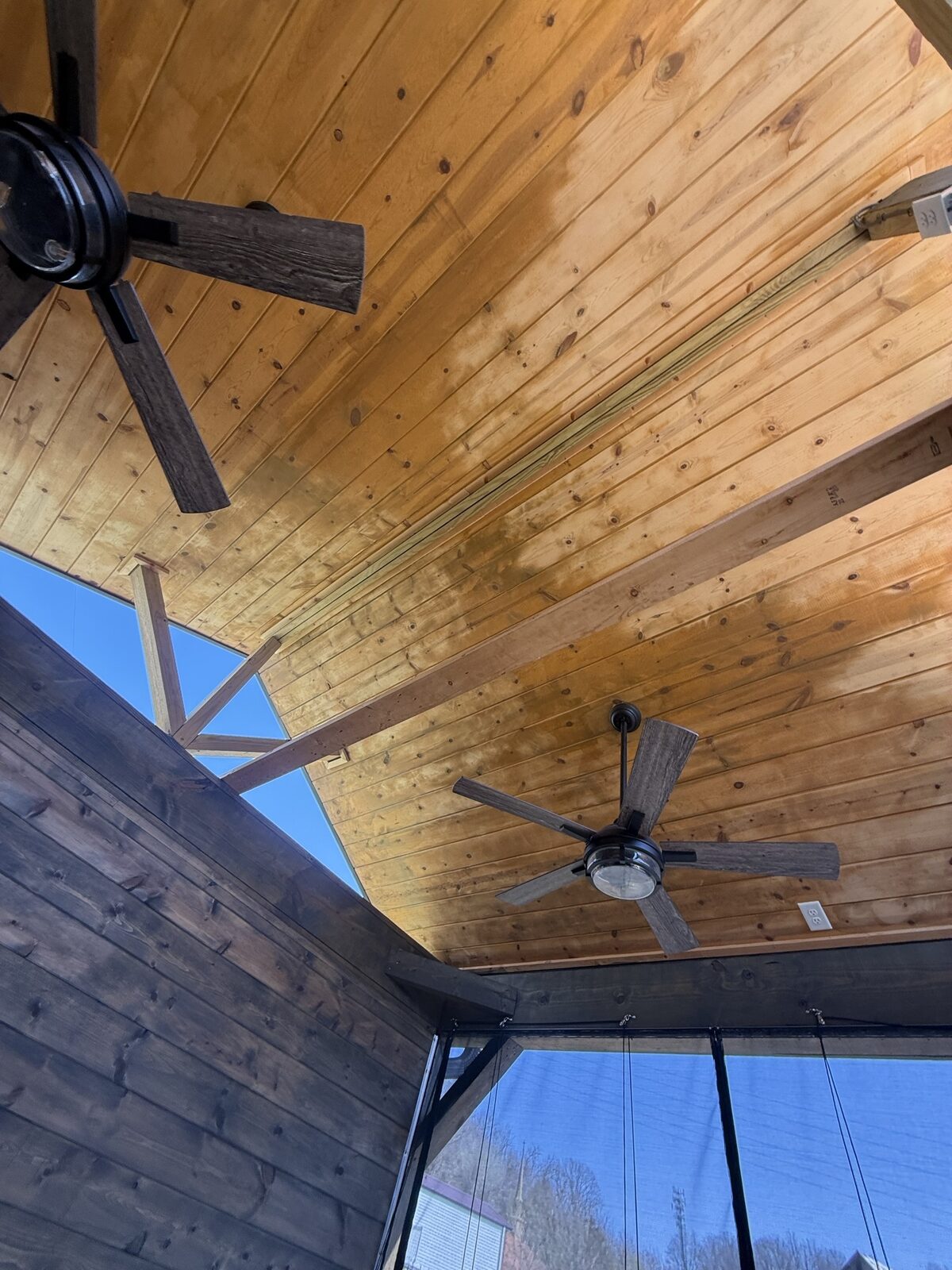
When the customer first called us, we walked into a gazebo with a ceiling that looked like the photos above. The previous coat had been applied at too high a film build for a penetrating oil stain. Here's what that means in plain English:
- Semi-transparent stains are designed to soak in. The active ingredients penetrate into the wood pores and bond from within. They're not paint and they're not a film coating.
- When too much product is put down at once, the excess has nowhere to go. The wood can only absorb so much oil per square foot. Anything beyond that capacity sits on the surface.
- Excess oil that pools on the surface gets tacky as it cures. You get drip marks running down vertical surfaces, blotchy patches where pools formed, and a generally uneven finish that looks worse the longer it cures.
- UV exposure makes it worse. The over-applied excess is the first to fail under sun, leaving even more dramatic patchiness over time.
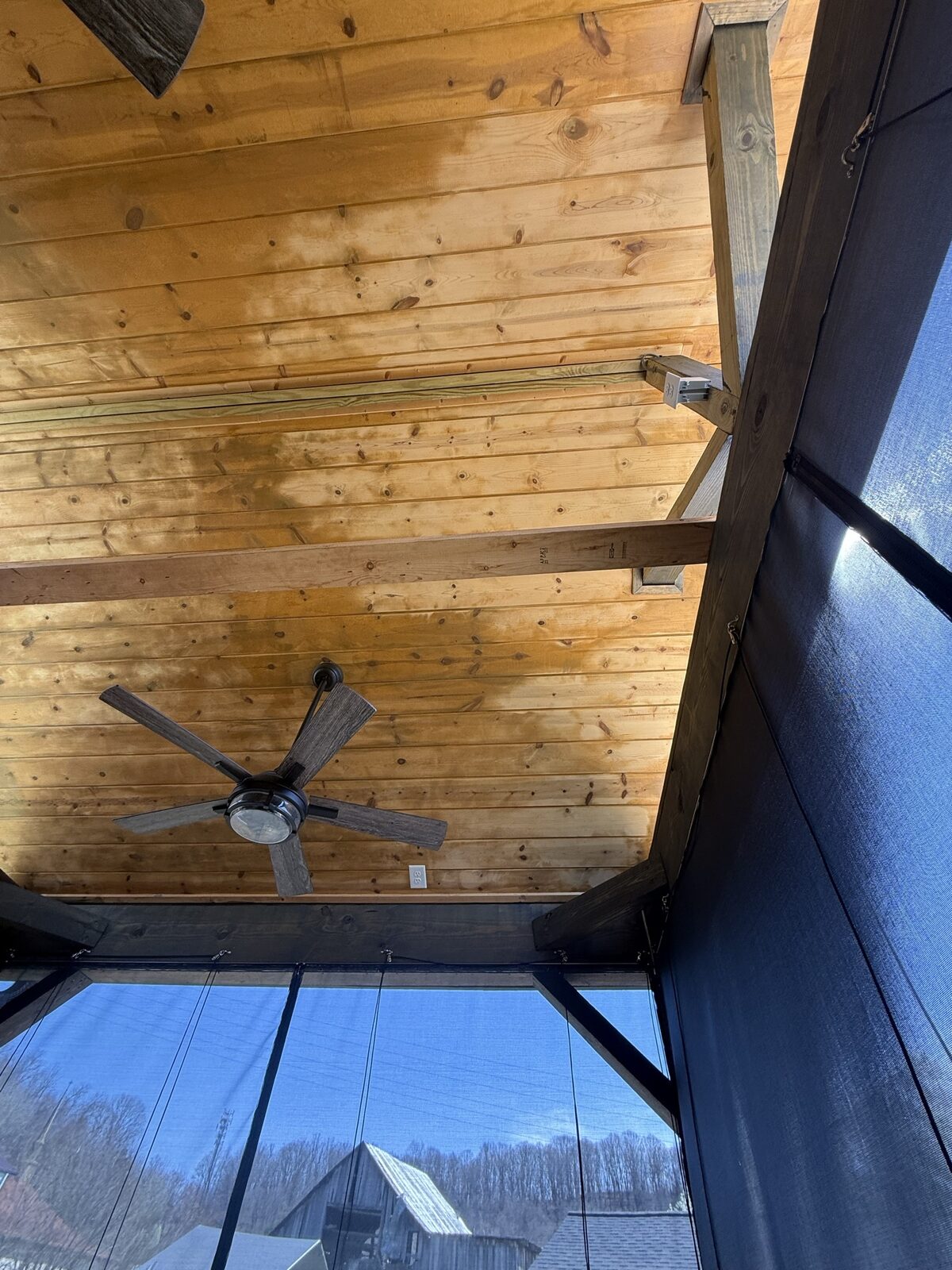
This is one of the most common semi-transparent stain failures we see. The fix is not to sand down a pinhole patch and try to blend — once the entire ceiling is over-applied, the entire ceiling needs to come back to clean wood before any new stain goes on.
The Rescue Process
Step 1: Sand the Affected Wood Back to Bare
We sanded the gazebo ceiling and beams all the way back to bare wood, pulling off the over-applied coat and any pooled oil that had cured tacky. This is labor-intensive — a gazebo ceiling is overhead work, every square inch needs to come down to clean wood, and the tongue-and-groove gaps require careful detail sanding. Multiple grit progression to leave a smooth, ready-to-stain surface.
Because we sanded all the way to bare wood, no chemical deck cleaner or neutralizer was needed for this project. Those steps are essential when you're working over an existing finish (cleaning the surface, neutralizing pH, brightening the wood). When you've sanded down to fresh bare wood, the surface is already clean and chemically neutral.
Step 2: Wipe Down
After sanding, we wiped the wood down to remove all sanding dust. Dust on the surface during stain application creates a gritty, uneven finish — and it's the only thing standing between bare wood and a perfectly even penetration. Tack cloth or a clean, lightly damp cloth, working with the grain.
Step 3: Apply Cabot® Semi-Transparent the Right Way
With the wood clean and dust-free, we applied Cabot® semi-transparent stain in a single deliberate coat — wet edge maintained, no over-application, wiping any excess that didn't soak in within 30–60 minutes. The point of semi-transparent stain is to add color while letting the wood grain show through. Restraint is the difference between a beautiful finish and another failure.
Note on the wall color: The dark color you see on the gazebo's vertical walls was applied by the homeowner himself before we got involved. Our scope on this project was the ceiling restoration. The combination of his existing wall color and our restored Cabot® ceiling is what created the finished look in the after photos.
After: The Finished Gazebo
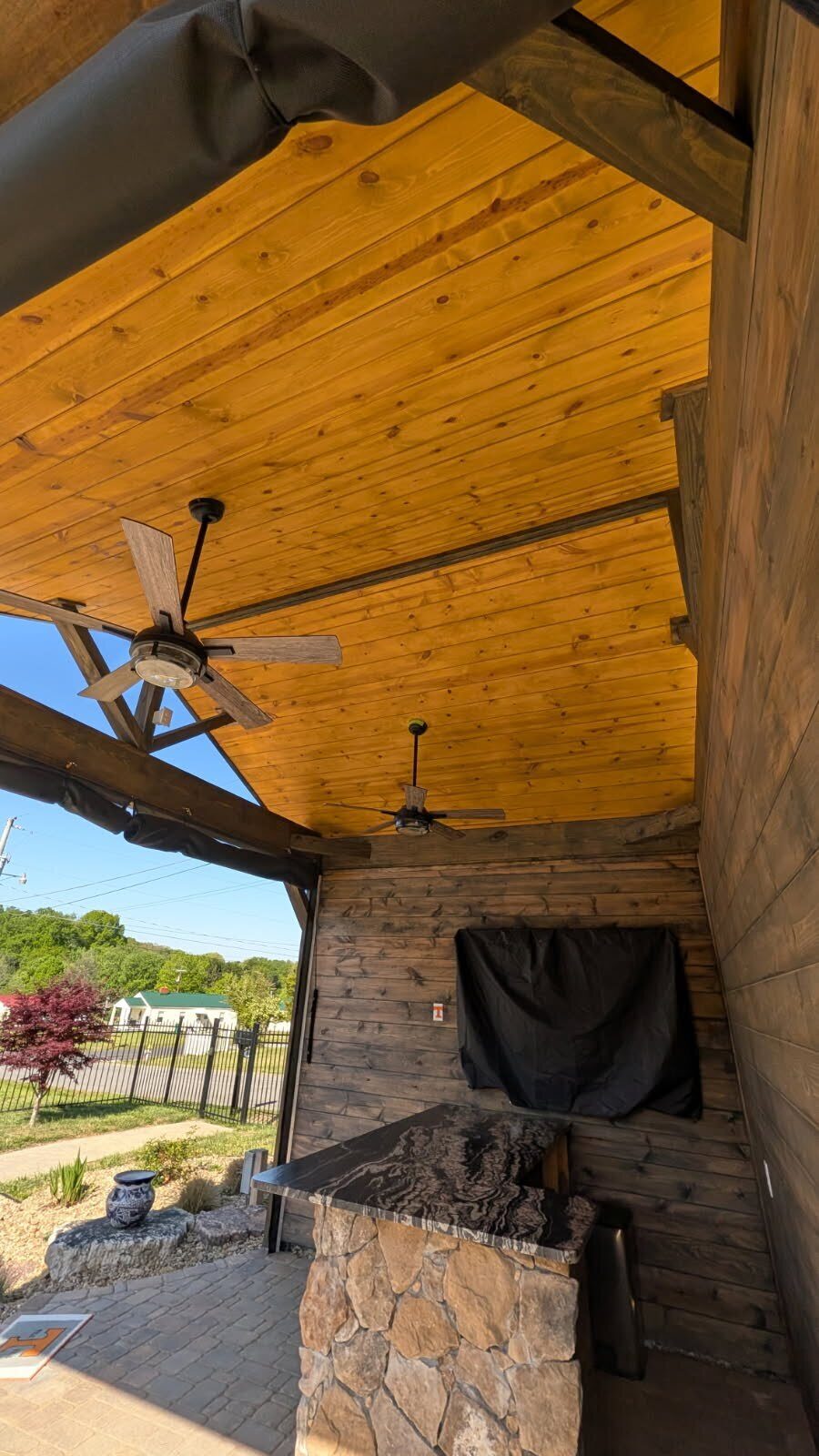
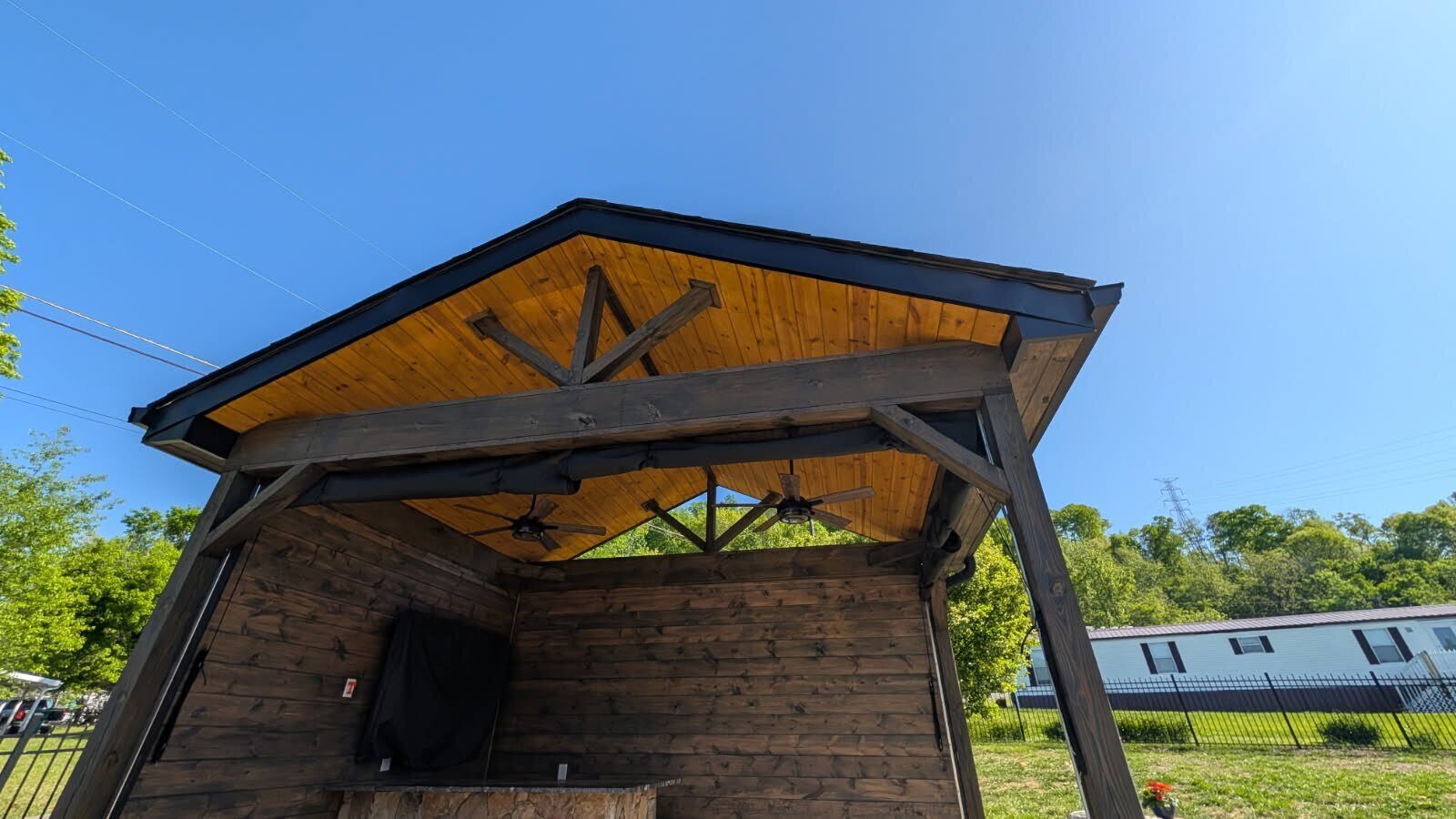
The transformation is dramatic in person. The ceiling went from blotchy and drip-streaked to a clean, uniform warm tone with grain visible through the stain. Combined with the homeowner's dark walls, the gazebo now reads as a cohesive outdoor living space rather than an afterthought.
How to Avoid This Problem on Your Project
If you're staining or restaining a gazebo, pergola, deck, fence, or any exterior wood with a semi-transparent oil stain, the rules are simple:
- Less is more. Apply only what the wood will absorb in 15–30 minutes. If puddles or pooling are visible, you've gone too heavy.
- Wipe excess. Any product still sitting on the surface 30–60 minutes after the final coat needs to come off with a clean rag. This is the most-skipped step in DIY stain jobs.
- Make sure the wood is dry. Oil-based stains can't penetrate damp wood. If the surface has been recently rained on or washed, give it time before staining.
- If you've already over-applied, don't try to layer over it. The fix is sanding back to bare wood and starting fresh. Half-measures don't work — new stain can't bond to a layer of cured-tacky old stain.
Why Cabot® Semi-Transparent for This Project
Cabot® semi-transparent stains are penetrating oil-based products designed for vertical and horizontal exterior wood. They emphasize wood grain and color rather than building a film, which is exactly what the customer wanted for the gazebo ceiling — a warm, woody, natural-finish look that lets the tongue-and-groove planks shine through. Cabot® has been a trusted name in deck and exterior wood stains for decades, with a track record of holding up well in East Tennessee's humid summers and freeze-thaw winters when applied correctly.
For comparison reading on stain product choices, see our Best Deck Stains for East Tennessee guide and the TWP 100 Series Rustic project walk-through.
Get a Stain Rescue or New Stain Quote
Rock's Painting handles deck, fence, gazebo, pergola, and other exterior wood staining projects across the Tri-Cities — Johnson City, Kingsport, Bristol, and surrounding communities. We do new stain jobs and rescue work on previously-failed stain (we sand, prep, and restart properly). If you have a project that's gone wrong or you're planning a new one, we'll come look and give you an honest assessment.
Request your free quote or call (423) 207-2347. We use Cabot, TWP 100 Series, Sherwin-Williams® SuperDeck®, Flood Solid, and other proven products depending on the project requirements.